By John Chege
Equipment guidance for Kenyan farmers; veterinary sources linked below.
Reading time: 8 minutes
Hoof care equipment in Kenya should be selected for the animal, the task and the operator’s training. Cattle, goats, sheep and horses need different handling and trimming approaches. Regular inspection, clean resting areas and prompt assessment of lameness matter across species. A cattle trimmer is not automatically suitable for smaller livestock or equine feet.
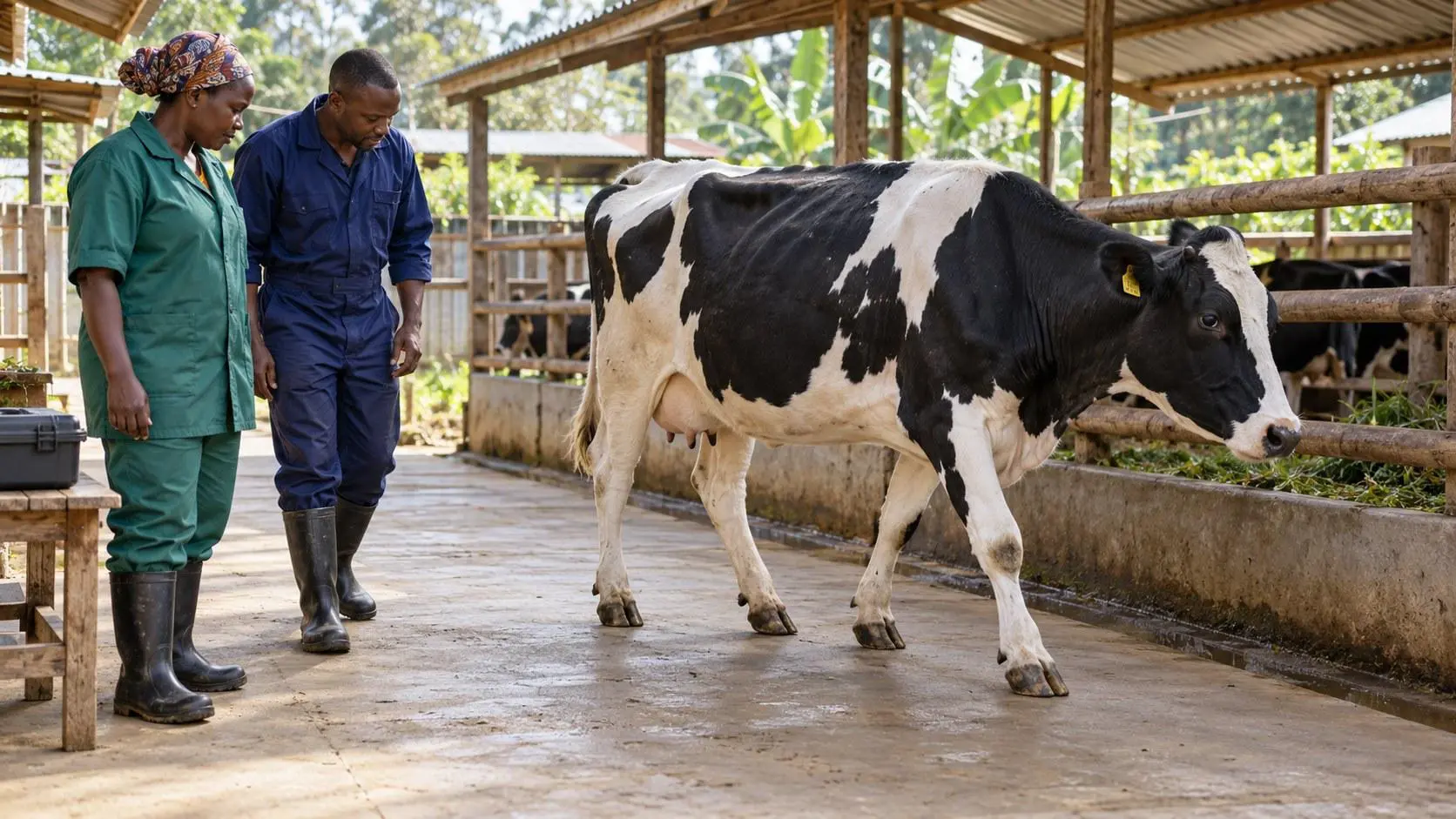
Figure 1. Watch cattle moving calmly on a level, non-slip route. Changes in stride or weight-bearing deserve prompt attention. AI-generated illustration of a Kenyan dairy-farm setting.
If I were choosing between a large cattle trimmer and a smaller pair of hoof shears, I would first ask which animal needs care. On a mixed farm in Nakuru, the same equipment cupboard may serve dairy cows, dairy goats and sheep. That does not make every tool interchangeable.
Start with All About Hoof Trimming for background; this guide covers equipment and early action.
In this guide: Why hoof care matters · Equipment kit · Inspection routine · Veterinary help · Cost example · Seasonal care · Key takeaways · Frequently asked questions · Request a tailored quotation
Why does hoof care matter?
Lameness is abnormal movement caused by pain or impaired function; it is a sign, not a diagnosis.
A limp can originate in the hoof or elsewhere in the limb. Trimming without assessment may worsen it.
A Kikuyu study assessed flooring, slurry management and locomotion in 100 zero-grazing units and 161 dairy cows (Kimeli and colleagues, 2015). These are study numbers, not national prevalence. Read the research record.
Inspect Nyandarua zero-grazing passages and resting areas; include tracks and watering points for grazing herds in Nandi.
MYTH vs FACT
Myth: All hoofed animals need the same tools and trimming timetable.
Fact: Species, hoof growth, natural wear and disease change the decision. Sheep in particular should not undergo
automatic routine trimming; infected feet require appropriate assessment and treatment (AHDB, “Lameness in
sheep”).
Which hoof care equipment suits each animal?
Safe handling and a competent operator come before cutting tools. Hoof shears are cutting tools commonly used for
small-ruminant horn; hoof nippers remove excess horn, and a rasp shapes or smooths it. Tool names alone do not establish species suitability.
Animal | Equipment to discuss with the professional | Important distinction |
Dairy and beef cattle | Suitable crush and foot support; cattle-suitable knives, nippers or trimmer; measuring tools | A trained cattle trimmer selects tools and decides whether horn removal is needed. |
Goats | Secure small-ruminant handling; appropriately sized hoof shears; cleaning supplies | Select for hoof size and access. Assess growth and wear before trimming. |
Sheep | Handling facilities and inspection supplies; suitable shears only when indicated | Avoid routine trimming of healthy feet or trimming infected feet as a default treatment. |
Horses | Hoof pick for routine cleaning; equine nippers, hoof knife and rasp for the farrier | A farrier is a specialist in equine hoof care and shoeing. Cutting and balancing require skill. |
Donkeys and other hoofed livestock | Species-specific assessment and an appropriately selected kit | Ask a professional experienced with that species; do not transfer cattle measurements or methods. |
For goats across Kenya: inspect for excess horn, debris and changes in movement. Hoof growth and environment influence care needs; ask a trained practitioner to demonstrate safe handling and establish an individual plan (SDSU Extension, 2024).
For sheep: owning shears does not mean using them at every flock gathering. AHDB advises against routine trimming and warns against trimming infected feet. A badly overgrown foot may need limited professional correction, but a limp is not permission to cut (AHDB, “Lameness in sheep”).
For horses: routine hoof cleaning and professional trimming are different jobs. Arrange a farrier’s assessment of balance, hoof condition and the need for shoes; set the interval for the individual horse rather than copying a cattle schedule (University of Minnesota Extension, “Caring for your horse’s hooves”).
Across species, include suitable gloves, cleaning equipment, labelled disinfectant and animal records. Trained operators should select protective equipment for the job. Grinders and therapeutic devices require specific competence.
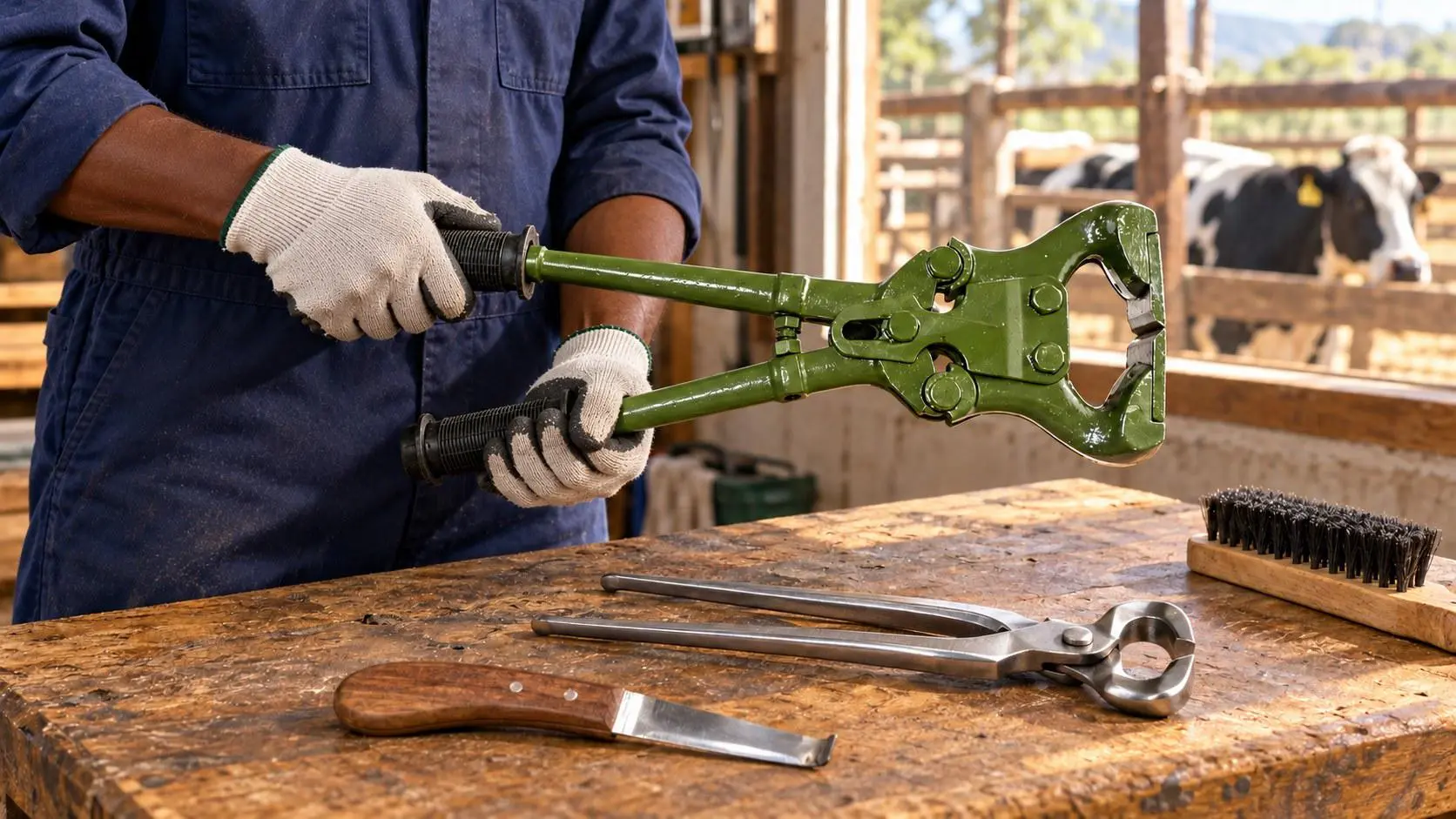
Figure 2. Cattle-tool example based on Medilink product photographs. This illustration does not establish suitability for goats, sheep or horses; confirm the intended species for each model.
EQUIPMENT SPOTLIGHT — Match the tool to the species
Medilink’s Hoof & Trimming Equipment category includes the listed HOOF TRIMMER - CATTLE. Its cattle label should not be treated as evidence of suitability for goats, sheep or horses.
- Animal fit: Specify species, age or size, and intended task.
- Operator control: Confirm jaw opening, grip and blade style with the user.
- Maintenance: Ask about cleaning, sharpening and replacement parts.
- Written confirmation: Request the exact model, species suitability, availability and any applicable warranty terms with the quote.
For smaller livestock or equines, ask Medilink to confirm an appropriate option before ordering; availability is not assumed.
How should farms organize checks?
Mobility scoring assesses how an animal walks.
For dairy cattle, AHDB uses a 0–3 mobility scale and recommends screening at least fortnightly. This cattle benchmark is not a universal scoring system for every species (AHDB, “Mobility scoring”).
- Observe: Watch animals moving calmly on a suitable, non-slip surface during daily care. Notice shorter steps, uneven weight-bearing or reluctance to move; do not force a painful animal to walk.
- Record: Note species, animal ID, date and the change. The ear-tag selection guide explains livestock identification options.
- Arrange assessment: Use a trained trimmer, farrier or vet according to species and signs. Handling equipment must fit the animal; do not improvise leg lifting.
- Improve surroundings: Clear manure, repair leaking troughs and reduce pooling water. For cattle housing, see the cow-comfort guide.
- Review: Record the professional’s findings and follow-up date. Keep goats, sheep and equines on their own care plans.
Dirty tools can transfer infectious organisms between feet and animals. Remove contamination and disinfect using a
suitable protocol; a quick wipe is not equivalent to disinfection (AHDB, “Equipment disinfection”).
When should the farmer call a vet?
Any animal unable to bear weight, in severe pain or struggling to rise needs urgent veterinary attention.
Keep feed and water accessible; avoid unnecessary walking.
VETERINARY CORNER — Escalate these signs
- Severe pain, inability to bear weight or difficulty rising.
- Marked swelling, a deep injury or deterioration after treatment.
- Several cattle, sheep or goats becoming lame together, especially with drooling or mouth blisters.
Foot-and-mouth disease affects cloven-hoofed animals, including cattle, sheep, goats and pigs; horses are not susceptible (WOAH, undated). Restrict movement and contact the county veterinary officer immediately if suspected. See the WOAH disease guidance here.
A footbath cannot replace individual diagnosis. Ask the vet about treatment and follow prescribed milk and meat withdrawal periods.
What could delayed action cost the farm?
Revenue-at-risk calculations do not guarantee recovery.
A hypothetical Nakuru dairy example assumes the following:
Assumed input | Value |
Affected cows | 1 |
Daily saleable-milk shortfall | 2 litres |
Duration | 14 Days |
Assumed farmgate return | Ksh. 45/litre |
Illustrative gross revenue shortfall | Ksh. 1,260 |
Calculation: 1 × 2 × 14 × 45 = KES 1,260.
These are assumptions, not measured results or current prices. Fees, labour, discarded milk and longer-term effects are excluded.
Compare equipment, training and visit costs against conservatively estimated avoidable losses. For sheep, goats and beef cattle, compare treatment bills, labour and recorded weight changes; include milk only for milking animals. For horses and working donkeys, record care costs and days unable to work, without assuming that every lost day has a
fixed cash value.
How should care change seasonally?
Wet-season preparation prioritises drainage and clean resting areas.
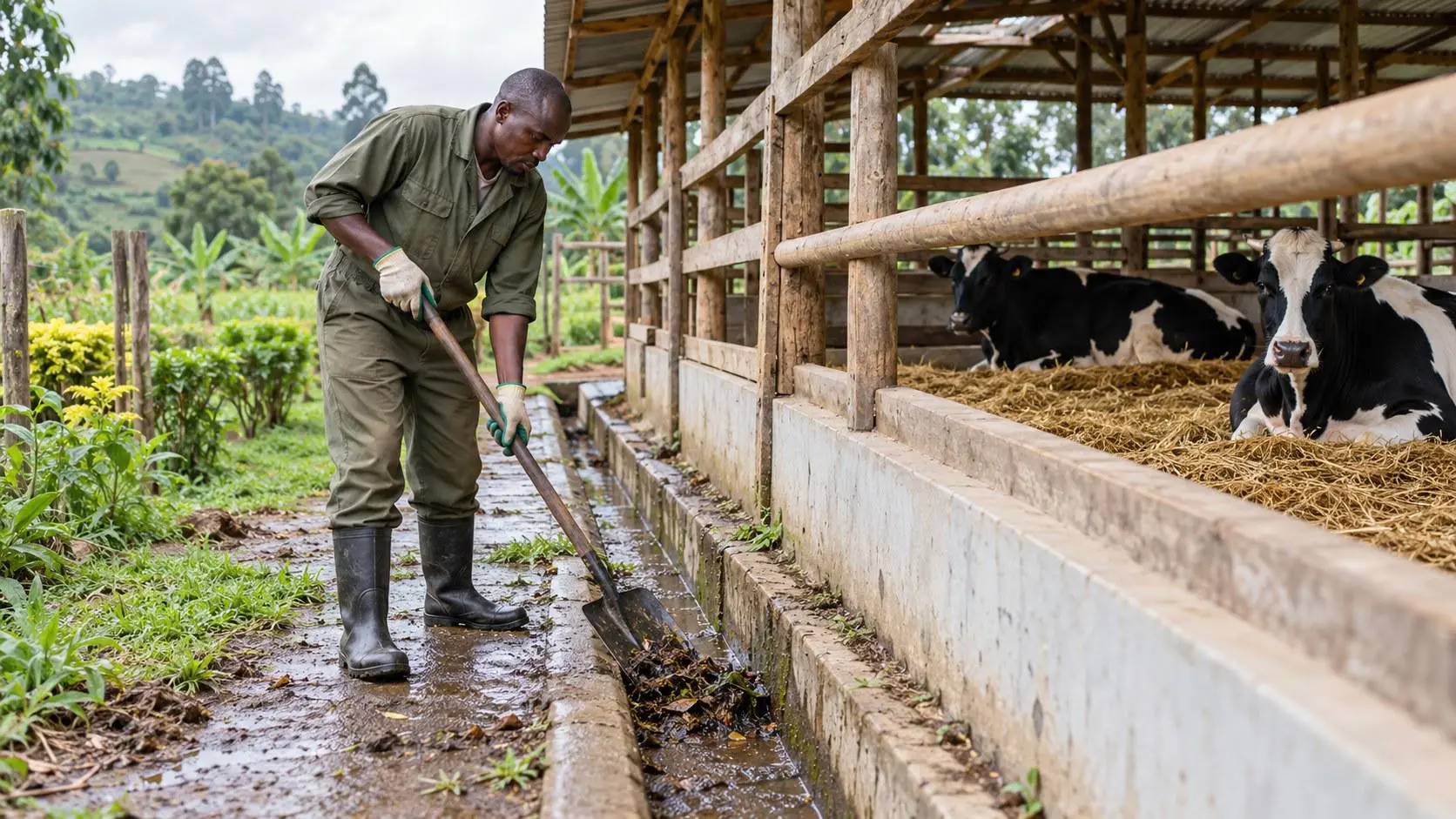
Figure 3. A cattle-housing example of drainage and dry bedding. Apply suitable drainage and resting-area checks to goat and sheep pens and equine stables too.
KMD identifies March–May as the long-rain season and October–December as the short-rain season (KMD, 2026)
 Open
- January–February: Check hard tracks, sharp stones and water-point approaches.
- March–May: Clear drains and review manure removal in cattle passages, goat and sheep pens, and stable approaches.
- June–September: Inspect tools and book planned assessments; conditions vary, and western counties may remain wet.
- October–December: Recheck pooling water, bedding and handling areas before short-rain disruption; review flock and farrier appointments.
Use county forecasts and actual ground conditions.
What should farmers remember?
Key Takeaways
- A limp needs assessment; trimming is not the answer to every case.
- Suitable restraint and training come before cutting equipment.
- Regular observation helps identify changes before severe impairment.
- Tool hygiene, drainage and resting conditions belong in the same plan.
- Match tools and trimming decisions to the species; avoid automatic routine sheep trimming.
- Buy against the operator’s requirements and confirmed product specifications.
What do farmers frequently ask?
Can the same hoof trimmer be used for cows, goats and sheep?
Not automatically. Tool size, cutting action and the intended species must match the task. A product labelled for cattle should not be assumed suitable for smaller feet. Ask the supplier and trained operator to confirm the exact model before purchase.
What hoof care equipment does a goat farmer need?
Start with secure handling, inspection records, cleaning supplies and access to a trained practitioner. Appropriately sized hoof shears may be needed where trimming is indicated. Have the practitioner check the proposed tool and demonstrate safe handling before adding cutting equipment to the farm kit.
Should sheep hooves be trimmed routinely?
No blanket routine is appropriate. AHDB advises against routine foot trimming and against trimming infected sheep feet. Inspect the flock and obtain prompt diagnosis of lameness; a badly overgrown foot may need professional correction, without cutting sensitive tissue or treating infection as simple overgrowth.
Do horses need different hoof tools from cattle?
Yes, select tools for equine hoof care. Owners can learn safe routine cleaning with a hoof pick, while a competent farrier handles trimming and balance using suitable equipment. Ask the farrier to set a care schedule for the individual horse’s condition and workload.
Can dirty hoof tools spread infection between animals?
Yes. Contaminated tools and hands can transfer infectious organisms. Remove visible dirt before disinfection and follow the product label and professional hygiene protocol. Sharing equipment across a mixed farm does not remove the need to clean it between animals and affected feet.
How do I order hoof care equipment for a mixed farm in Kenya?
Send Medilink the species, numbers and approximate animal sizes, your county and the operator’s requirements. Request a quotation confirming the model, intended species, availability and delivery charges. Describe existing handling facilities so the recommendation accounts for safe use as well as cutting tools.
How can Medilink help?
Request a tailored quotation: send animal species, herd or flock size, county, handling facilities and your trained operator’s requirements.
WhatsApp Medilink for a tailored hoof-care quotation
Call 0722 779774. Prices are supplied on quotation. For planning a new livestock enterprise, see the starting-a-new-farm guide.