In Kenya, a dairy calf's first 90 days decide whether she becomes a strong heifer that calves at 24 months or a stunted animal that costs you feed for years. Feed clean colostrum within two hours of birth, offer calf starter and clean water early, keep the pen dry, and wean on starter intake — not age. Good rearing turns today's calf into tomorrow's milking cow.
~7 min read
Contents
- The two-farmer story
- Why the first 90 days matter more than any other stage
- Colostrum: the single most important feed of a calf's life
- How much milk should a dairy calf get?
- When and how to wean a dairy calf
- Keeping calves alive: scours, pneumonia and the rainy season
- The equipment that makes clean feeding easy
- What poor rearing really costs you
- A calf-rearing calendar for Kenya's seasons
- Key takeaways
- FAQ
Two farmers, same cow, very different heifers
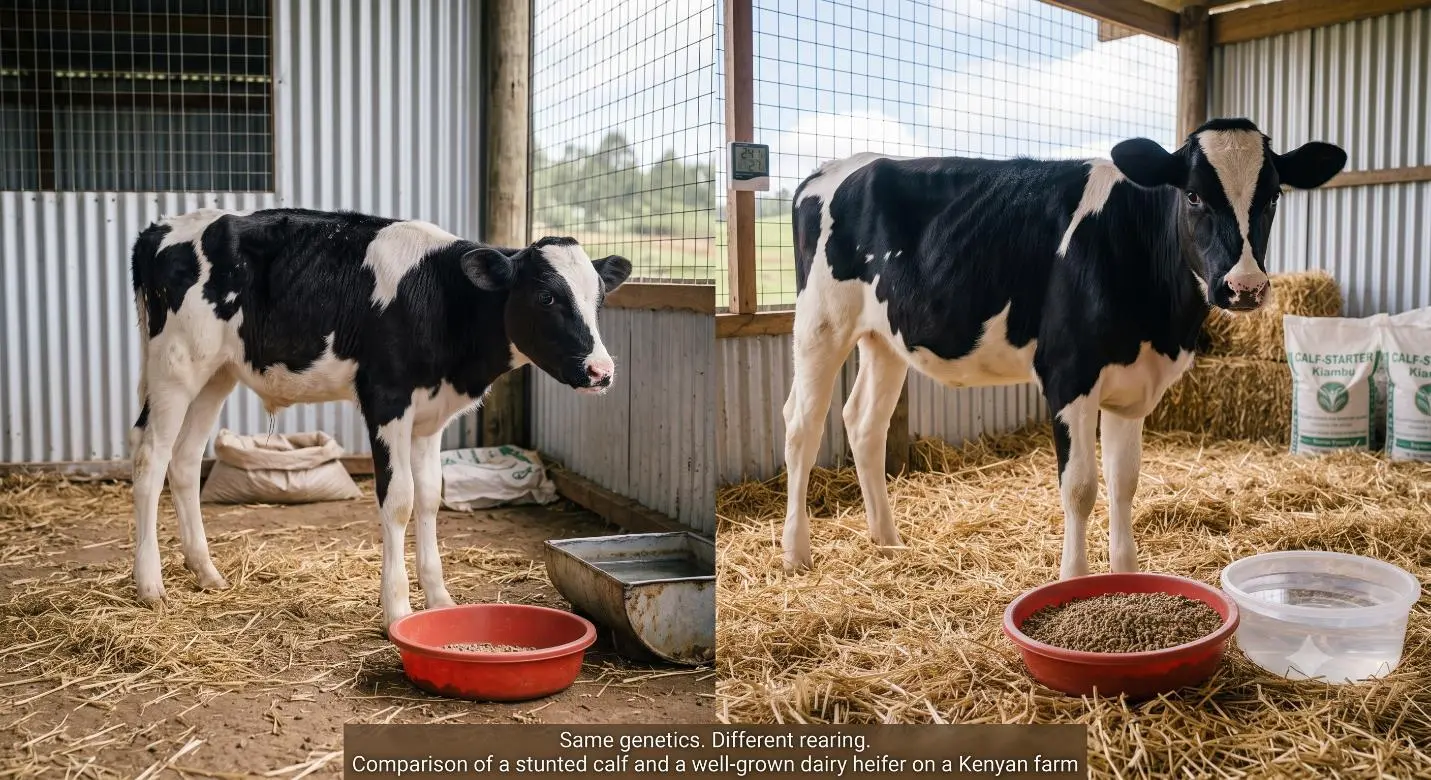
Two farmers buy in-calf Friesians the same week. Two years later, one is milking a strong, well-grown heifer that calved at 24 months. The other is still feeding a small, ribby two-and-a-half-year-old that has not calved and is eating money every single day. Same genetics. Same region. The difference was decided in the first three months of the calf's life.
I have walked into enough sheds across Kiambu and Nyandarua to know the pattern. When calves are stunted, it is almost never the breed's fault. It is a wet pen, colostrum given too late, or milk fed from a dirty bucket. The good news: calf rearing is one of the few areas of dairy farming where cheap, simple habits produce a huge return.
Why the first 90 days matter more than any other stage
Calf rearing is the practice of managing a newborn calf from birth through weaning so it grows into a healthy, productive replacement animal. In a dairy herd, your calves are your future milking cows — so a calf lost or stunted is milk you will never sell.
The Kenyan numbers are sobering. Across many tropical dairy farms, pre-weaning calf mortality runs at 15–25%, and on poorly managed farms as high as 50%, against under 8% on well-run farms (Moran, 2011). In a study of smallholder farms in Kiambu District, crude calf mortality reached 22% per year, with diarrhea the leading cause (Gitau et al., Preventive Veterinary Medicine). Losses like these quietly erase herd growth.
Growth tells the same story. On Kenyan smallholder farms, the median pre-weaning daily weight gain was just 0.31 kg/day — well below the 0.5–0.7 kg/day a dairy heifer should be gaining (Tropical Animal Health and Production, Nakuru study). Slow early growth pushes back the day she calves, and every extra month is feed with no milk in return.
QUICK FACT: On poorly managed tropical farms, up to 1 in 2 calves can die before weaning — yet the fixes are colostrum, a dry pen, and clean feeding, not expensive drugs.
Colostrum: the single most important feed of a calf's life
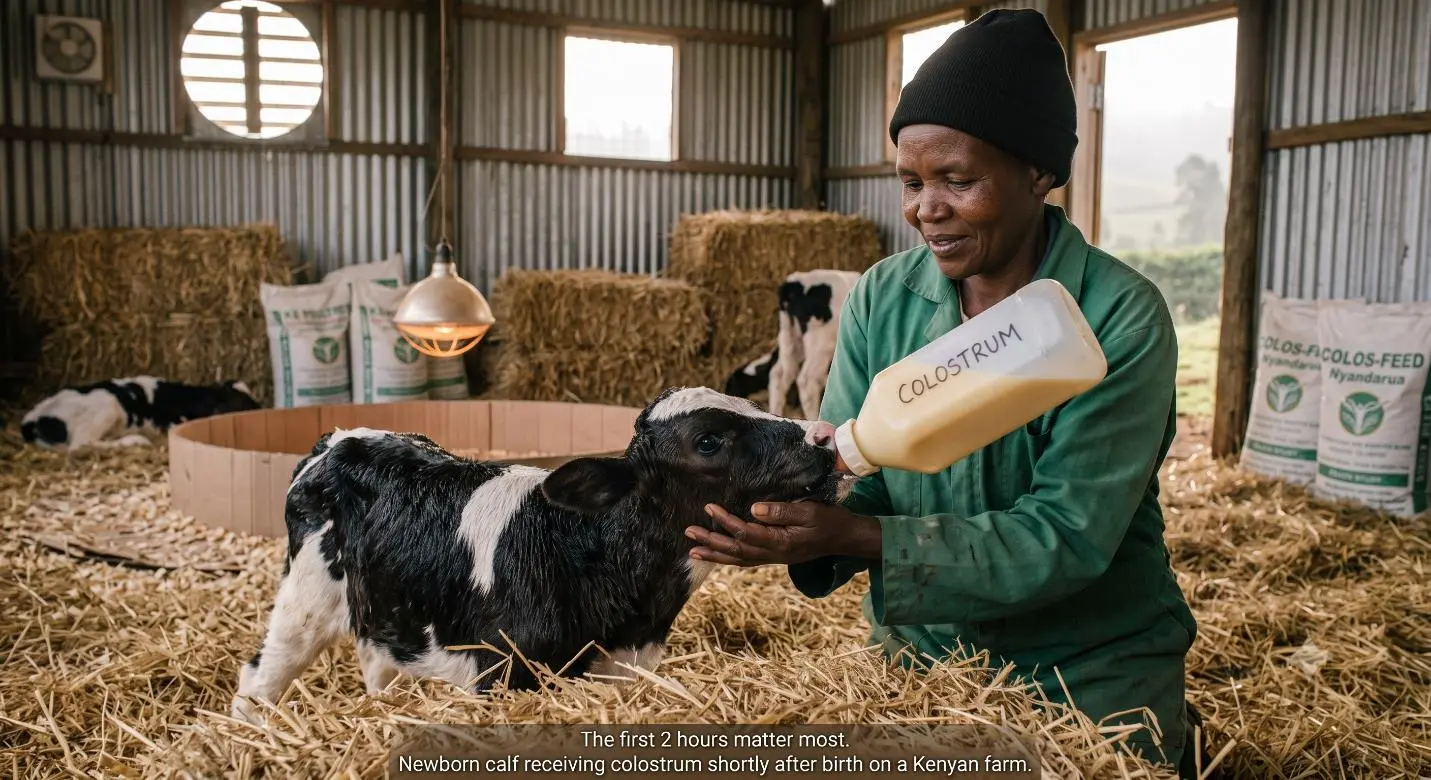
Colostrum is the thick, yellowish first milk a cow produces after calving; it carries the antibodies a newborn calf needs because calves are born with almost no immunity. Miss this window and no amount of good feeding later fully makes up for it.
The rule is simple and it is free:
- Feed within the first 2 hours of birth — the calf's gut absorbs antibodies best right after birth and the door closes fast within 24 hours.
- Feed enough — aim for about 10% of the calf's body weight in the first 24 hours (roughly 4 litres for a 40 kg Friesian calf), split into feeds.
- Feed clean colostrum from a healthy udder. Colostrum from a cow with mastitis can do more harm than good — one more reason to detect and prevent mastitis early in your milking herd.
- Use a clean, dedicated bucket or bottle — never the same container that carried yesterday's slurry.
How much milk should a dairy calf get?
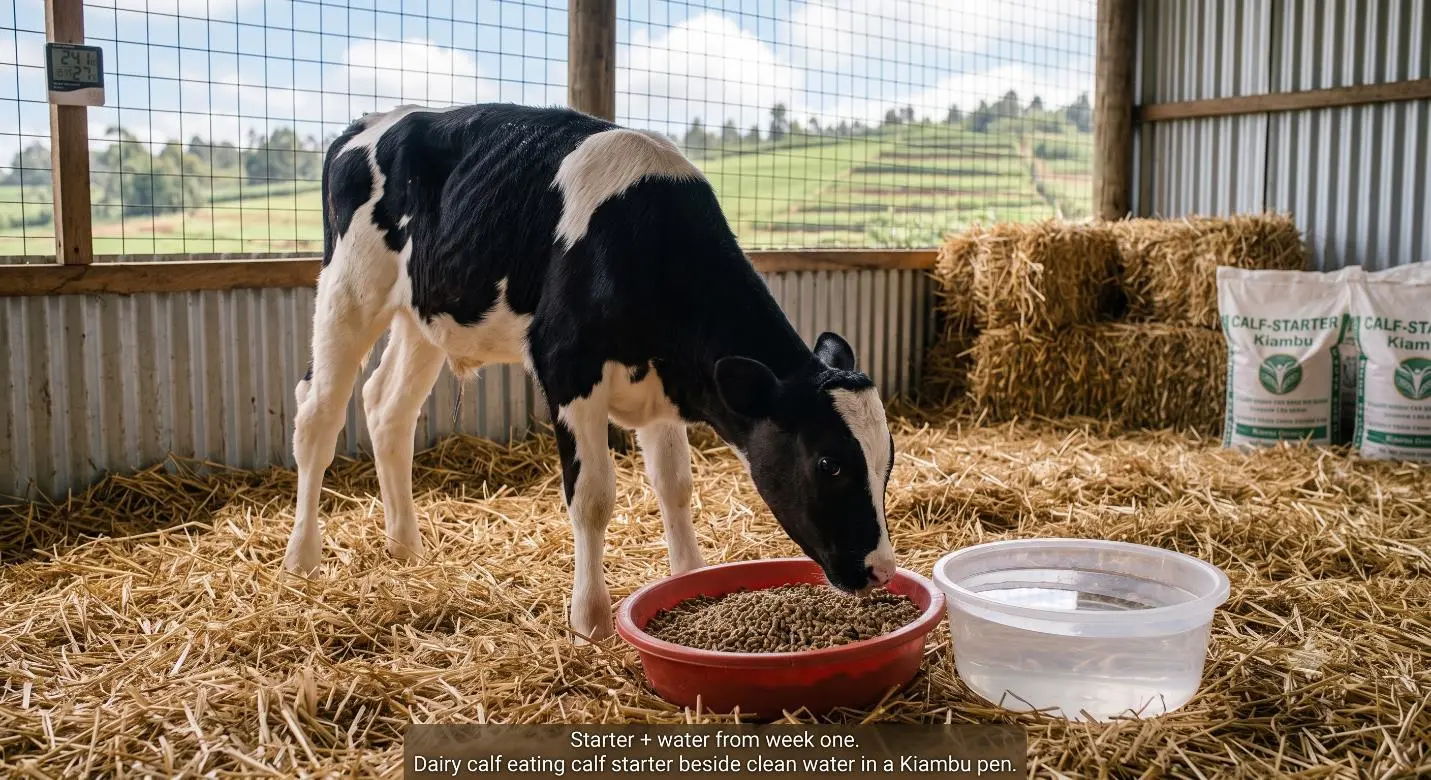
After colostrum (days 2–4), the calf moves onto whole milk or a good milk replacer. A practical Kenyan starting point is around 10% of body weight per day — about 4 litres/day for a 40 kg calf, split into two feeds — adjusted up as she grows.
Two habits matter more than the exact litres:
- Feed at the same times, at body temperature, from a clean bucket. Cold or sour milk and dirty buckets are a direct route to scours.
- Introduce calf starter and clean water from week one. Nibbling starter early develops the rumen so the calf can be weaned on time. Calves that only get milk stay "milk-dependent" and crash at weaning.
MYTH vs FACT — Myth: "A calf only needs milk; starter and water can wait."
Fact: Early access to calf starter and clean water builds the rumen and is what lets you wean on time. Delaying water and concentrate is linked to slower growth on Kenyan farms (Tropical Animal Health and Production).
When and how to wean a dairy calf
Weaning is the transition from a milk diet to solid feed. The most common mistake in Kenya is weaning by the calendar. Wean by the stomach instead.
- Wean on starter intake, not age. The signal is when the calf is eating about 1 kg of calf starter a day for three days in a row, usually somewhere between 8 and 12 weeks.
- Step down milk gradually over 1–2 weeks so the rumen takes over — don't cut milk overnight.
- Target: a calf should roughly double her birth weight by weaning. If she hasn't, she isn't ready.
Keeping calves alive: scours, pneumonia and the rainy season
Two enemies kill most Kenyan calves: scours (diarrhoea) in the first month and pneumonia, especially in cold, wet weather. In the Nakuru study, calf diarrhoea (10.2%) and pneumonia (6.5%) were the most common disorders. Coccidiosis is widespread too — in Mukurwe-ini, Nyeri, Eimeria (coccidia) was found in 42.7% of pre-weaned calves (Kang'ethe et al.).
VETERINARY CORNER — catch scours early
- Watch for: watery or bloody dung, sunken eyes, a calf that won't suckle, cold ears.
- Act fast: the calf dies from dehydration, not the germ. Give oral rehydration salts early and call your vet — don't wait for it to "pass."
- Prevent: dry bedding, clean buckets, colostrum on time, and a pen the sun and air can reach. A dry, well-drained pen is your cheapest medicine.
Simple, low-cost housing works. A Kenyan trial found that affordable roof and floor improvements raised post-weaning growth by about 5.6% (Tropical Animal Health and Production) — proof that a dry calf is a growing calf.
The equipment that makes clean feeding easy
You do not need imported automatic feeders to rear calves well in Kenya. You need feeding gear you can actually keep clean, feed after feed, so the same bucket isn't spreading yesterday's bacteria.
EQUIPMENT SPOTLIGHT — Calf Feeding Buckets (Medilink)
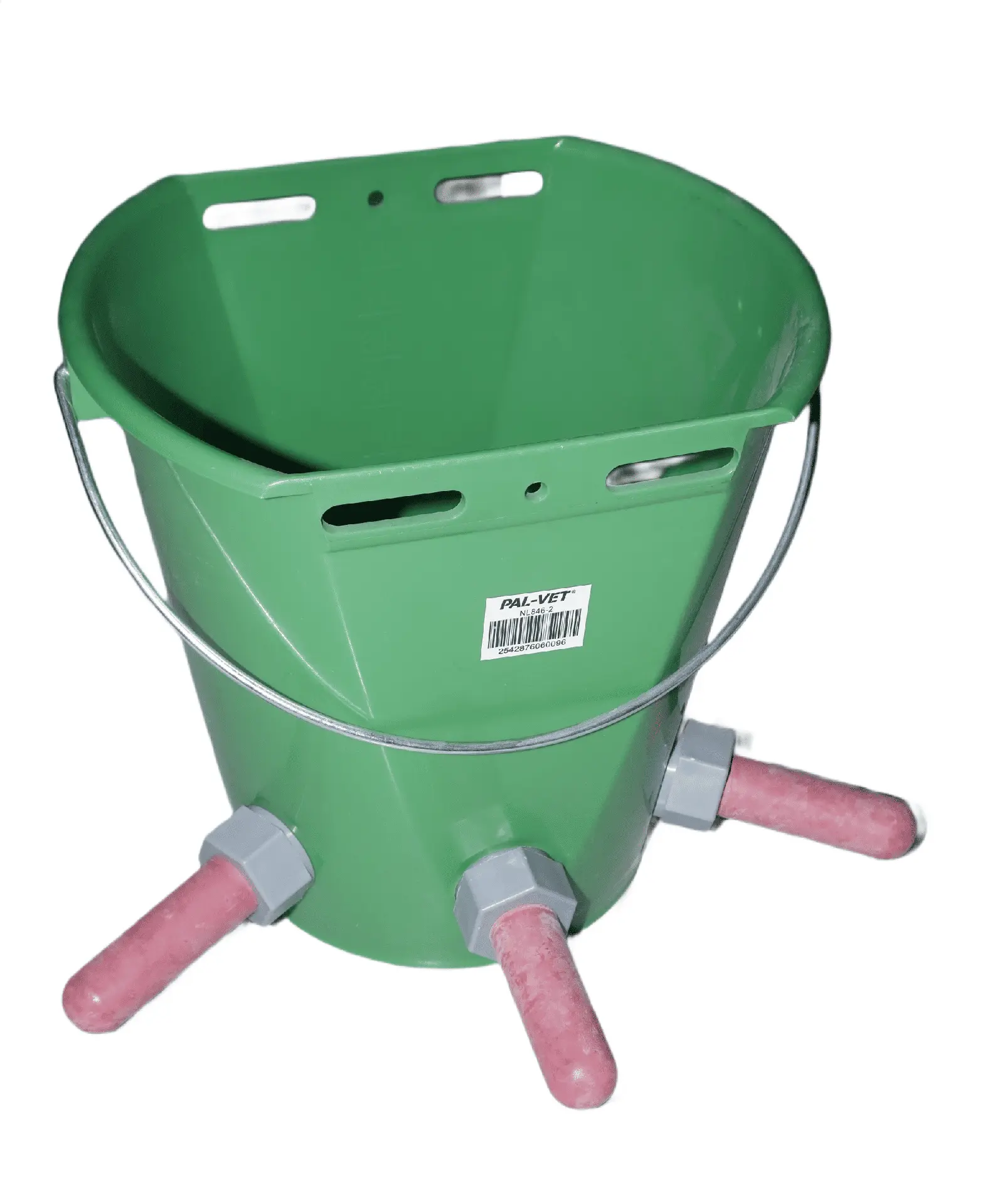
Purpose-built calf feeding buckets are the workhorse of clean calf rearing.
- Hygiene by design: smooth interior cleans out with a simple round brush — no hidden corners for scour bacteria.
- Consistent feeding: the same clean bucket, same routine, every feed.
- Durable & farm-ready: built for daily zero-graze use, not one season.
- Part of a full range: see Medilink's Feeding Equipment (Cattle) range for the rest of the calf kit.
Not sure what your setup needs? Send your herd size on WhatsApp for a tailored calf-feeding list — details below.
Rearing calves well is the first link in a chain that ends at the milking parlour. Get it right and, in a couple of years, today's calf is the cow you'll want a good milking machine for — the same journey behind Grace Mumbi's 90-litres-a-day herd.
What poor rearing really costs you
Here's the honest math. Assumptions stated openly; check your own co-op and feed prices.
Item/Benchmark | Kenya Smallholder Reality | Ideal Target | Notes (source) |
Pre-weaning daily gain | 0.31 kg/day | 0.5 - 0.7 kg/day | Kenyan median 0.307 kg/day (Trop. Anim. Health Prod., Nakuru) |
Pre-weaning mortality | 15-25% (up to 50%) | <8% | Tropical vs well-run farms (Moran, 2011) |
First colostrum | often late/too little | within 2hrs; approx. 10% body wt in 24hrs | approx. 4L for a 40kg calf (FAO/dairy science) |
Weaning | by age (guesswork) | approx. 1kg starter/day x 3 days | 8-12 weeks, wean on intake |
Age at first calving | often 30-36+ months | 24 months | every extra month=feed, no milk |
Illustrative example (Nyandarua composite). A stunted heifer that first calves at 34 months instead of 24 is fed for ~10 extra months with zero milk income. At an assumed KES 100/day in feed and management, that's roughly KES 30,000 lost per heifer before she ever fills a bucket — plus the delayed milk cheque. Multiply across several replacements a year and calf rearing stops looking like a small job. Get management right across the board with these dairy farming fundamentals.
A calf-rearing calendar for Kenya's seasons
- Long rains (Mar–May): highest pneumonia and scours risk. Keep bedding dry, block draughts and cold rain, drain the pen, dry every bucket.
- Short rains (Oct–Dec): repeat rainy-season hygiene; watch for mud at pen entrances that tracks bacteria in.
- Dry, hot spells (Jan–Feb & Jun–Sep): shade and clean water available at all times — heat and flies drive dehydration and eye/disease problems.
- Year-round: colostrum within 2 hours, deworming and coccidiosis control on your vet's schedule, and weekly weigh-band checks so a slipping calf is caught early.
Key Takeaways
- The first 90 days set lifetime performance — a stunted calf rarely becomes a top cow.
- Colostrum within 2 hours, ~10% of body weight in the first day, is the highest-value free thing you can do.
- Wean on starter intake (≈1 kg/day for 3 days), not on age — usually 8–12 weeks.
- Scours and pneumonia kill more calves than anything else; a dry pen and clean buckets prevent most cases.
- Clean, dedicated feeding equipment is cheap insurance against calf-hood disease.
- Slow rearing has a shilling cost — late calving is months of feed with no milk.
Frequently Asked Questions
How soon should a newborn calf get colostrum in Kenya? Within the first 2 hours of birth. A calf is born with almost no immunity and its gut absorbs colostrum antibodies best right after birth, closing within about 24 hours. Aim for roughly 10% of body weight — about 4 litres for a 40 kg calf — in the first day.
How much milk should I feed a dairy calf per day? Start at about 10% of body weight daily — roughly 4 litres for a 40 kg calf — split into two clean, warm feeds. Increase as she grows, and always offer calf starter and clean water from week one so the rumen develops for weaning.
When should I wean a dairy calf? Wean on intake, not age. When the calf eats about 1 kg of calf starter a day for three days running — usually between 8 and 12 weeks — step milk down gradually over 1–2 weeks. She should have roughly doubled her birth weight.
What causes calf scours and how do I prevent it in Kenya? Scours (calf diarrhoea) is the leading cause of calf death in the first month, driven by dirty feeding, wet pens, and bugs like E. coli and coccidia. Prevent it with on-time colostrum, dry bedding, clean dedicated buckets, and early oral rehydration if a calf goes loose.
At what age should a dairy heifer first calve? The target is 24 months. Many Kenyan heifers calve much later because slow early growth delays maturity. Every extra month is feed cost with no milk income, so early growth in the first 90 days directly protects your bottom line.
Are calf feeding buckets better than a bottle for group rearing? For most Kenyan zero-graze units, clean buckets are practical, durable and easy to keep hygienic across several calves — the biggest driver of calf health. Whatever you use, the rule is the same: one clean, dedicated feeding vessel, washed after every feed.
Ready to raise stronger heifers?
Rearing calves right is the foundation of every profitable dairy farm — and it starts before the calf is a week old.
- Start here: our free guide for building a healthy herd from the ground up → Starting a New Farm.
- Get a tailored calf-feeding list: send your herd/calf numbers to Medilink on WhatsApp and we'll recommend the right feeding gear — no obligation → WhatsApp Medilink (0743 621263).
Or email biz1@medilink.co.ke · Book a free consultation.
SOURCES & REFERENCES
1. Moran, J.B. (2011). Factors Affecting High Mortality Rates of Dairy Replacement Calves and Heifers in the Tropics. Asian-Australasian Journal of Animal Sciences 24(9):1318–1328. — https://www.researchgate.net/publication/264078544
2. Gitau, G.K. et al. Factors influencing calf morbidity and mortality in smallholder dairy farms in Kiambu District, Kenya. Preventive Veterinary Medicine. — https://www.sciencedirect.com/science/article/abs/pii/0167587794900051
3. Richards, S. et al. Effect of housing improvement and other factors on growth of heifer calves on Kenyan smallholder dairy farms. Tropical Animal Health and Production (2021). — https://link.springer.com/article/10.1007/s11250-020-02548-4
4. Effect of Supplementation on Performance of Calves on Smallholder Dairy Farms, Bahati Division, Nakuru. — https://www.researchgate.net/publication/46032662
5. Kang'ethe, E.K. et al. Prevalence of Cryptosporidia, Eimeria, Giardia and Strongyloides in pre-weaned calves, Mukurwe-ini, Nyeri. — https://www.ncbi.nlm.nih.gov/pmc/articles/PMC4774781/
6. Kenya Dairy Board — https://www.kdb.go.ke (herd/sector context)
7. KALRO — https://www.kalro.org (dairy husbandry guidance)
8. FAO Kenya — dairy sector benchmarks
Note: sources 1–5 are the specific stat citations used inline; add KALRO/KDB/FAO as outbound links on the general dairy-context lines.
HASHTAGS
#CalfRearing #DairyKenya #FormNiKufarm #DairyFarmingKenya #ZeroGrazing #CalfCare #KenyanFarmers #Nyandarua #Kiambu #LivestockKenya #MedilinkVetSuppliers #AgribusinessKE