Once rain reaches your livestock farm, prioritise drainage, dry
resting areas, protected feed and clean drinking water. Strengthen
milking hygiene, inspect young animals closely and review disease
prevention with your veterinary professional. Fresh pasture is welcome,
but wet conditions also demand changes to how you house, feed and
monitor animals.
The first proper rain can feel like a business turnaround arriving from the sky.
Dust settles. Grass starts growing. The prospect of buying every mouthful of
fodder becomes a little less painful.
Then you step into the cowshed. Water is running through the calf pen. The feed
bags nearest the wall are damp. The milking entrance has become a muddy
bottleneck.
Rain brings opportunity, but it also exposes weaknesses that dry weather allowed
you to overlook. Where will water, mud or disrupted routines create your
next avoidable loss?
1. Follow the water before buying anything
Once conditions are safe, walk the farm during or immediately after rainfall. Start
uphill and follow the water towards animal housing, feed stores and drinking
points.
Look for roof runoff entering sleeping areas; blocked gutters; overflowing drains;
water around gateways and troughs; manure washing towards water sources; and
slippery routes to the milking area. Mark the spots and photograph them to
compare conditions after repairs.
Separate clean roof runoff from manure-contaminated water wherever practical.
Directing dirty water out of a shed is only half a solution if it ends up in a stream,
well or your neighbour’s compound.
For grazing farms, avoid repeatedly driving animals through saturated ground.
University of Minnesota Extension recommends removing livestock from
excessively wet pasture and managing feeding and watering points to limit mud
and pasture damage. Adapt grazing decisions to local soils and stocking
conditions.
What should you fix first?
What you find | First action | Follow-up |
Water entering beds | Move animals to a suitable dry area; stop inflow | Repair roofing, gutters or drainage |
Floodwater reaching feed | Separate affected feed from usable supplies | Arrange assessment before feeding |
Deep mud at a gateway | Use a safe alternative route where possible | Improve surface and water diversion |
Runoff entering drinking water | Provide a protected alternative supply | Investigate contamination and testing |
Rising water near housing | Move people and animals early, while routes are safe | Establish an evacuation route and destination |
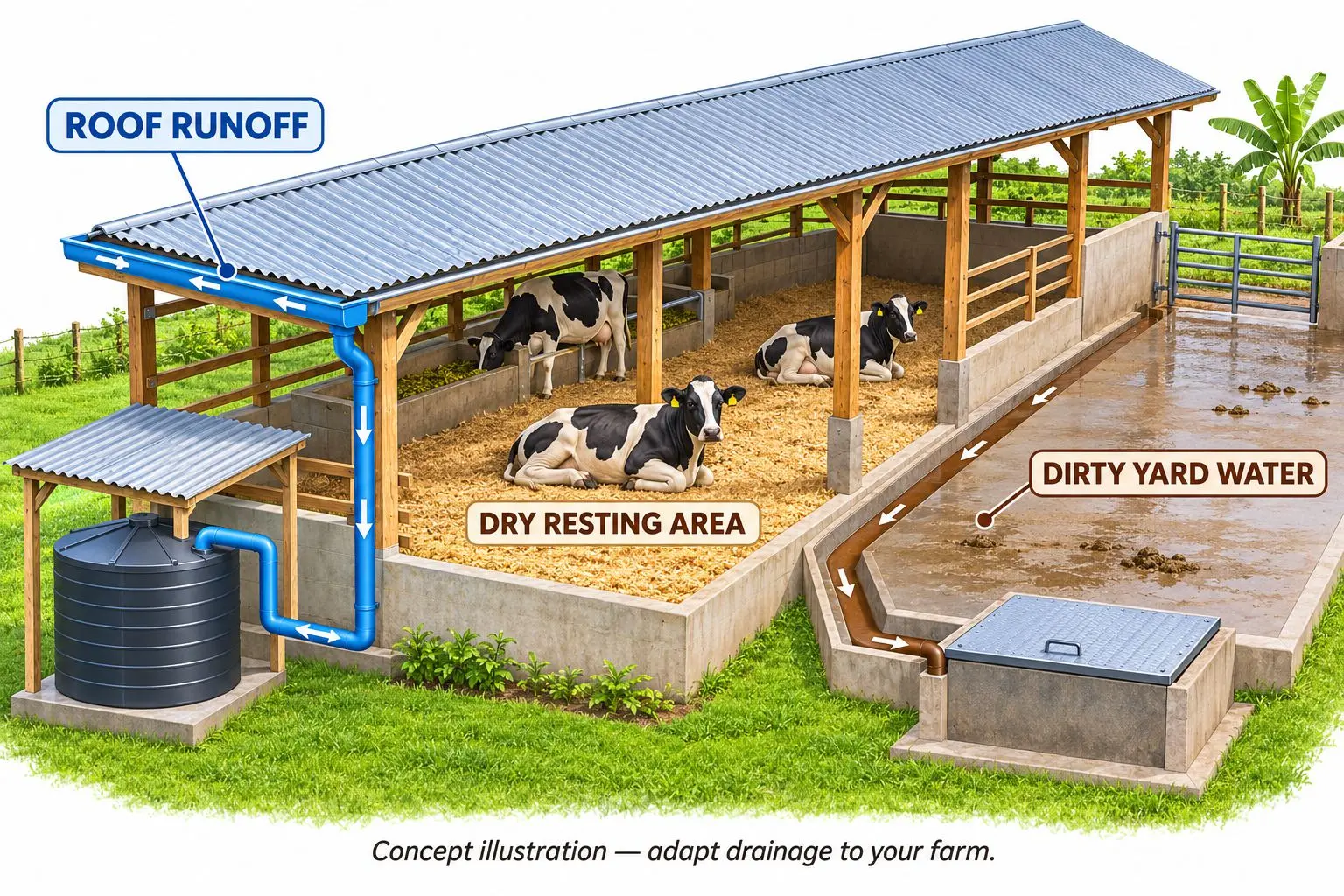
Concept illustration: keep roof runoff and dirty yard water in separate systems.
Where money is tight, stop water entering the building before investing
in equipment to manage the damage inside it.
2. Check the bed underneath the animal
A roof does not guarantee a dry resting area. Wind-driven rain, leaking drinkers
and poorly drained floors can leave bedding wet long after the shower ends.
Check where animals actually lie, including corners and the edges of mattresses.
Remove wet, heavily soiled material and correct the moisture source.
For calves, press a clean knee into the bedding. If it becomes damp, the resting
surface needs attention. This simple check appears in University of Minnesota
Extension’s calf-care guidance.
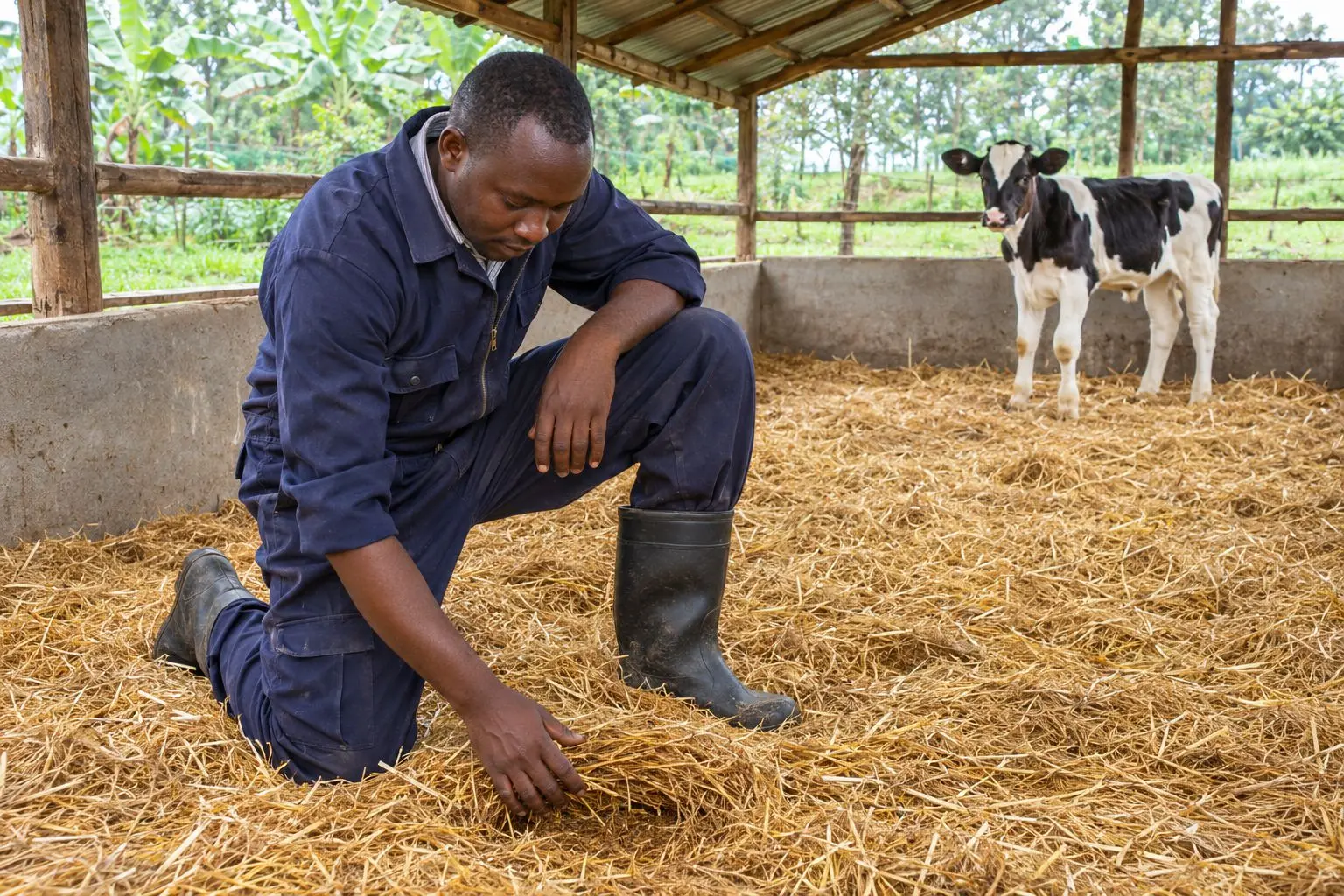
Check beneath the surface: bedding can look dry on top while holding moisture underneath.
Give particular attention to calves, lambs and kids. Keep their resting areas dry
and sheltered from direct draughts while maintaining fresh airflow. University of
Minnesota’s basic calf-care guidance stresses dry bedding, clean feeding
equipment and appropriate ventilation.
Cow mattresses can form part of a suitable resting system, but they still need
cleaning, correct installation and moisture management. A comfortable surface
cannot compensate for a leaking roof.
Medilink’s guide to cow mattresses provides further reading on resting-area
options.
3. Make the milking routine ready for muddy cows
When cows arrive with dirtier legs and udders, the answer is a consistent
preparation routine.
- Check the udder and observe foremilk for abnormalities.
- Remove dirt from teats using a suitable cleaning routine.
- Follow the teat disinfectant’s instructions, including contact time.
- Dry teats with individual clean towels or suitable single-use material.
- Apply the appropriate post-milking teat disinfectant.
- Clean equipment according to its manufacturer’s procedure.
University of Minnesota Extension explains that forestripping helps reveal flakes,
clots or unusual milk colour, and that teat preparation and timing matter for udder
health.
If milk looks abnormal, keep it out of the saleable supply and seek veterinary
guidance. A hot, painful udder or an animal that is visibly unwell deserves prompt
attention.
Use screening tools without overinterpreting them.
The California Mastitis Test, or CMT, helps screen individual udder quarters for
inflammation. It does not identify the responsible organism or tell you which
medicine to use. University of Missouri Extension explains these limitations in its
CMT guidance.
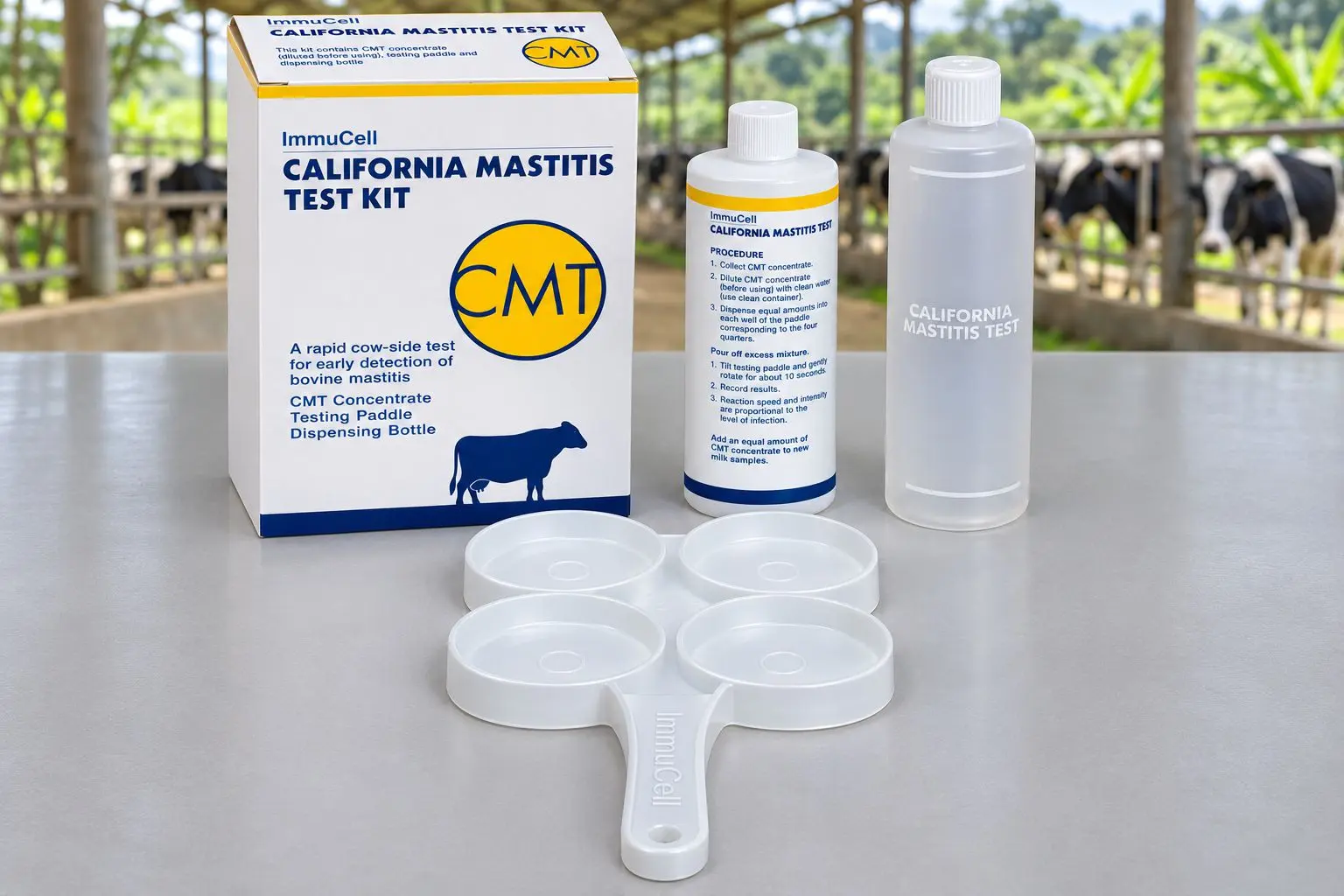
CMT kit: four-well paddle, concentrate and dispensing bottle. AI-enhanced illustration based on Medilink’s product photograph.
Medilink lists a CMT KIT - COMPLETE. Ask about kit contents, reagent instructions
and correct interpretation. Set a testing routine with your veterinary professional
rather than treating every reaction as an automatic prescription.
4. Welcome fresh grass with a feeding plan
Green growth is encouraging. It is also a reason to review the ration.
Avoid abruptly replacing the existing diet with large amounts of unfamiliar lush
forage. Introduce changes gradually and ask your livestock nutrition adviser how
to maintain a balanced diet for your animals and production level.
Be especially careful with hungry cattle entering lush, legume-rich pasture. Penn
State Extension identifies young, lush lucerne as a bloat risk. Its guidance comes
from American grazing systems, but the underlying forage hazard is relevant
wherever comparable feeds are grown.
Watch feeding behaviour after a change. Sudden abdominal swelling, distress or
breathing difficulty requires urgent veterinary attention. Do not wait for a home
remedy to prove itself.
Also inspect the feed store
- Move bags away from leaking walls and wet floors.
- Keep feed raised on suitable pallets.
- Check roof edges, doors and drainage outside the store.
- Separate suspicious feed instead of mixing it into a larger batch.
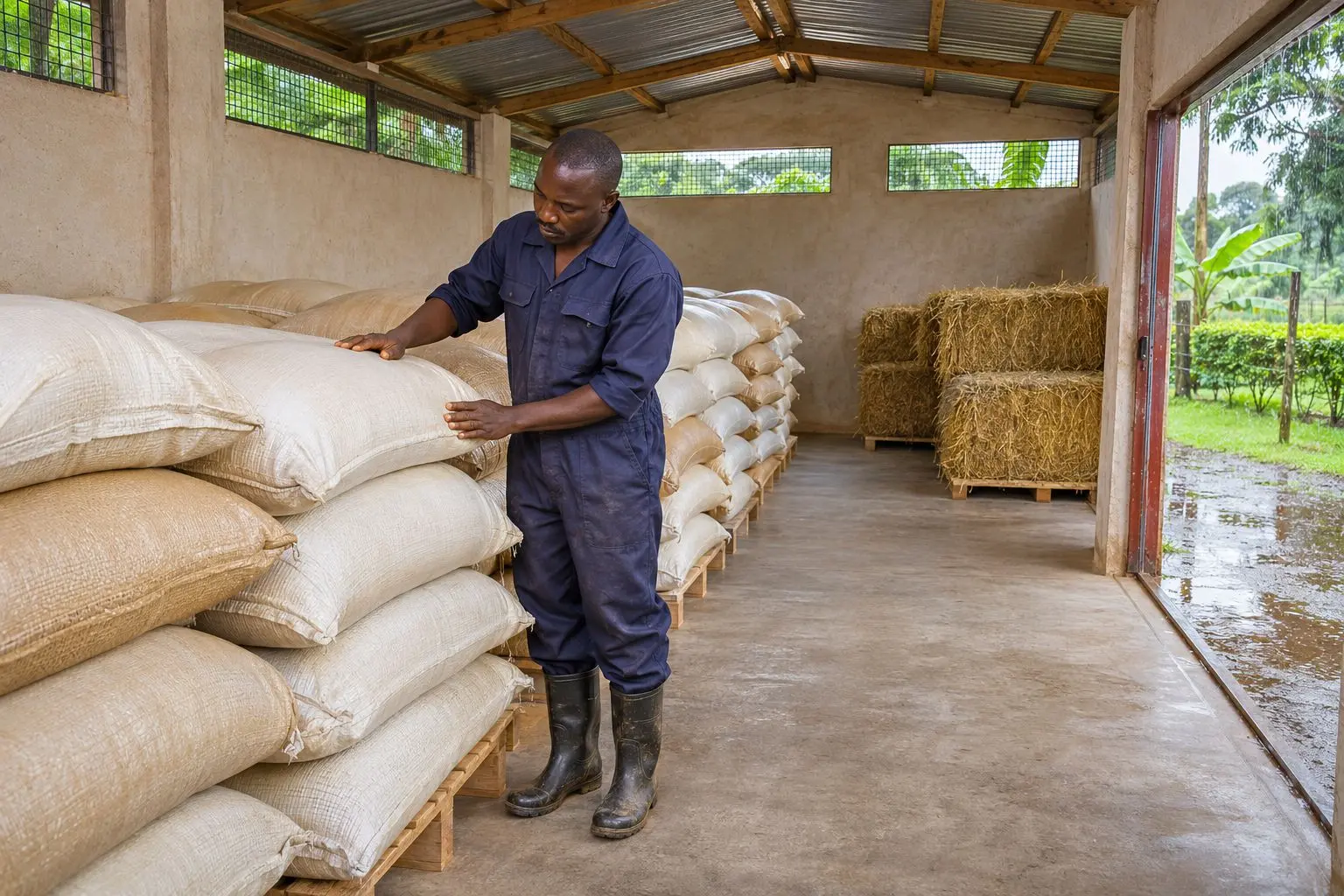
Store feed above the floor, protect it from rain and leave room for inspection and airflow.
KALRO’s hay-making and storage guidance highlights adequate drying as
essential to avoiding mould growth.
Plan how you will conserve surplus fodder while growth is available. Choose a
method that fits your crop, drying conditions, labour and storage capacity.
5. Protect drinking water from what the rain carries
A full trough can still be a dirty trough.
Inspect it after heavy rain. Could runoff enter from a manure heap, grazing area or
neighbouring plot? Are animals standing in mud to reach it? Is a leaking valve
continually wetting the surrounding floor?
Make cleaning easy and keep the surrounding surface well drained.
Assess the installation before choosing a drinking bowl
- Is the water supply reliable?
- Can it deliver enough water when several animals need to drink?
- Can the bowl be cleaned and inspected easily?
- Are valves and fittings replaceable?
- Will the mounting position suit the animals using it?
Medilink lists a CATTLE BOWL - STAINLESS STEEL. Confirm its dimensions,
connection requirements and suitability for your water system before ordering. A
bowl cannot make a contaminated supply safe.
6. Review disease prevention with your vet
Rainfall should trigger a review of your herd-health plan, not an automatic round
of every medicine in the cupboard.
Discuss parasite control, vaccination history, grazing conditions and any local
disease alerts with your veterinary professional. Keep records of the product used,
animals treated, date and applicable withdrawal periods.
Take unusual abortions and young-animal deaths seriously
The World Organisation for Animal Health explains that heavy rainfall and flooding
can favour mosquito populations involved in Rift Valley fever transmission. The
disease can cause abortions and deaths among young livestock and can also
infect people. Rainfall alone does not establish that an outbreak is
occurring.
Report clusters of abortions, unexplained deaths or severe illness promptly to
your veterinary professional or county veterinary office.
Keep people and other animals away from aborted material and carcasses while
awaiting instructions. Avoid bare-handed contact. Vaccination decisions should
follow veterinary advice and relevant official guidance.
The aim is early reporting and an informed response, not diagnosing a disease
from the weather.
7. Give poultry housing its own inspection
On mixed farms, do not let the cowshed absorb all the attention.
Check poultry houses for roof leaks, drinker spills and wet or caked litter. Maintain
ventilation while protecting birds from rain entering the building. University of
Minnesota Extension recommends removing wet litter patches and controlling
moisture and ammonia through ventilation.
For young chicks, monitor both brooder conditions and bird behaviour. Check the
heating arrangement and prepare for interruptions to your normal energy supply.
Medilink lists a BROODER THERMOMETER. Confirm its range, readability and
placement requirements before selecting it.
A thermometer is useful because it gives you something to check.
It does not replace watching the chicks.
8. Turn the inspection into a weekly routine
A rainy-season checklist works best when someone owns each task.
- Record the problem and its location.
- Assign who will address it.
- Set the completion date.
- Check whether the fix held during the next rainfall.
Keep a simple daily animal record alongside it: appetite, milk output where
relevant, illness, abnormal milk and young-animal losses. Changes are easier to
investigate when you can establish when they began.
Use local weather information to plan feed deliveries, repairs and animal
movements. The Kenya Meteorological Department provides forecasts and
warnings, while KALRO’s digital agriculture platform links farmers to agro-weather
services and agricultural advice.
Prepare a workable alternative if your normal road becomes impassable or milk
collection is delayed. Agree on the response with your collector before the
disruption occurs.
Frequently asked questions
Should I disinfect every muddy area?
Start by removing manure and organic dirt and correcting drainage. Use
disinfectants only for an appropriate purpose and according to their labels. Ask
your veterinary professional which areas and procedures need disinfection.
Can buying new equipment solve rainy-season problems?
Equipment helps when it addresses a clearly identified need. Check drainage,
routines, installation requirements and maintenance first. A new drinker will
achieve little if the supply is contaminated or its valve is left leaking.
When should I call a vet instead of continuing to monitor?
Seek prompt help for breathing difficulty, sudden severe swelling, inability to
stand, severe weakness, a painful udder with illness, unusual abortions or
unexplained deaths. Record what you observed and when it started.
Equip the farm around its most urgent need
Before purchasing, identify the gap: udder-health screening, chick-temperature
monitoring, drinking-water provision or another specific task.
Contact Medilink with your livestock type, herd or flock size and
the problem you need to solve. Ask about suitable equipment, current
availability and a quotation.
Image note: Farm scenes are AI-generated illustrations, not documented customer farms. The CMT image is
AI-enhanced from Medilink’s product photograph.
References
Technical reading and source material
University of Minnesota Extension
Managing grazing livestock during wet weather
University of Minnesota Extension
Raising calves that thrive in the winter
University of Minnesota Extension
Basic care practices for healthy calves
University of Minnesota Extension
Timing the milking procedure
Penn State Extension
Grazing Alfalfa in Pennsylvania
World Organisation for Animal Health
University of Minnesota Extension
Kenya Meteorological Department
Weather forecasts, warnings and agricultural weather services
KALRO
Kenya Digital Agriculture Platform
Sources consulted for the article on 11 November 2026. International guidance is used for relevant husbandry
principles; seasonal calendars and production conditions should be adapted to Kenya. Product and
further-reading links are embedded in the article.