Early in my dairy journey in Nakuru, I had a high-yielding Friesian heifer go slightly off-feed on a Tuesday morning. I assumed she was just adjusting to fresh fodder and decided to wait it out. By Thursday evening, she was recumbent, dull, and visibly struggling.
When our local veterinary officer arrived, the first thing he did was take her temperature: 41.2°C—she had been running a high fever for days. By waiting until she collapsed, emergency treatment was far more expensive, and her milk production took weeks to recover. That loss taught me a valuable lesson every livestock keeper must learn: never wait for visible collapse when basic tools can tell you days earlier that your animal needs a vet.
Having a veterinary digital thermometer and a double-head veterinary stethoscope is not about replacing your veterinarian. It is about creating a reliable early warning system so you know exactly when to call them before it becomes an emergency.
The Danger of Guesswork in Herd Health
Most livestock keepers wait until an animal stops eating, isolates itself, or shows obvious weakness. In dairy cows and small ruminants, these outward behavioral signs usually indicate the advanced stage of illness.
A fever or a slow digestive system often begins 24 to 48 hours before an animal visibly looks sick. When you can spot an abnormal temperature or a silent gut early, you can contact your animal health practitioner immediately. Early veterinary intervention means faster recovery, lower drug bills, and minimal loss in production.
3 Critical Vitals Every Farmer Can Safely Check
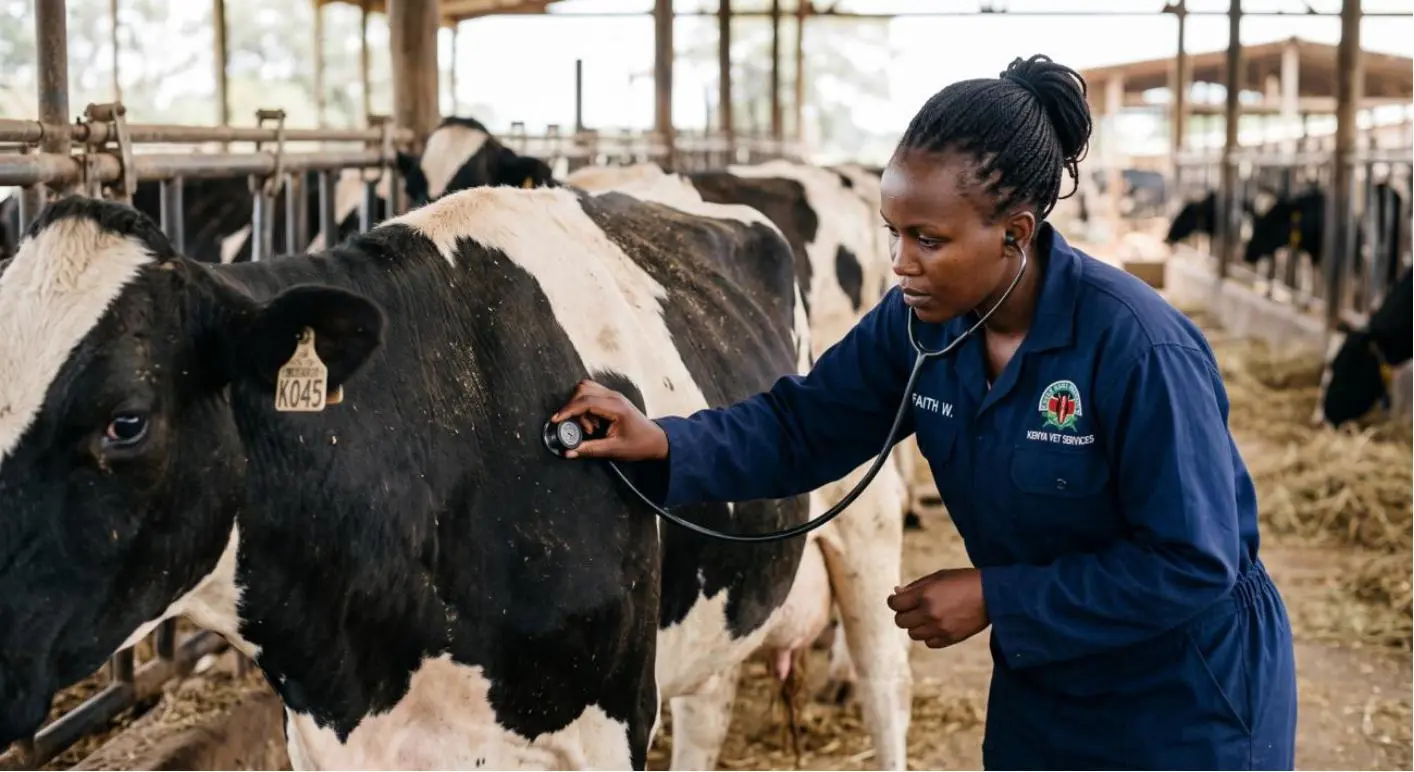
Core Body Temperature (Digital Thermometer)
A fever is the body's natural response to infection or inflammation—it does not tell you the exact disease, but it clearly warns you that the animal's immune system is fighting something. A veterinary digital thermometer with a rectal probe provides an objective reading within 10 to 30 seconds.
- Cattle Target: 38.5°C – 39.5°C
- Goats & Sheep Target: 38.5°C – 40.0°C
- Pigs Target: 38.5°C – 39.5°C
If the temperature reads significantly above these ranges, do not attempt to self-prescribe—notify your veterinarian right away with the exact reading.
Rumen Motility (Stethoscope on Left Flank)
The rumen is the engine of any cow or goat. Placing a stethoscope firmly against the left flank (the depression in front of the left hip) lets you hear whether that engine is running.
- Normal Sound: A deep, rolling churning sound occurring 1 to 2 times per minute.
- Warning Sign: Complete silence or unusually weak, infrequent sounds indicate ruminal stasis (the digestive system has stalled).
Chest & Breathing Sounds (Stethoscope on Thorax)
By placing the stethoscope chest piece behind the front elbow and sliding across the ribs, you can listen to airflow through the lungs.
- Normal Sound: Smooth, quiet, even breathing.
- Warning Sign: Harsh wheezing, rattling, or crackling sounds indicate respiratory distress that requires professional diagnosis.
Step-by-Step: How to Check Vitals Before Calling the Vet
- Restrain the Animal Safely: Secure the head in a crush or stanchion so both you and the animal remain safe.
- Take the Rectal Temperature: Lubricate the clean probe tip with mineral oil or water-soluble gel. Insert gently against the rectal wall until the device beeps, then note the reading.
- Listen to the Left Flank: Hold the stethoscope head firmly against the left paralumbar fossa for 60 seconds and count the deep churns.
- Listen to the Chest Area: Gently position the stethoscope behind the left elbow to check for smooth, clear lung sounds.
- Call Your Veterinarian with Facts: When placing the call, you can now say: "Daktari, cow number 4 has a temperature of 40.5°C and no rumen movement since morning." This allows your vet to prioritize your case, pack the right diagnostic tests, and act immediately upon arrival.
Vital Signs Benchmark Table
Health Parameter | Normal Range (Cattle) | Normal Range (Shoats) | When to call the Vet | Essential Tool |
Body Temperature | 38.5°C – 39.5°C | 38.5°C – 40.0°C | Consistently >39.8°C or <37.5°C | Digital Thermometer |
Rumen Contractions | 1–2 per minute | 1–2 per minute | Silence or <1 churn in 2 minutes | Stethoscope |
Heart Rate | 48–84 bpm | 70–90 bpm | Unusually rapid, pounding, or weak | Stethoscope |
Breathing | 20–40 breaths/min | 15–30 breaths/min | Wheezing, rasping, or heavy panting | Stethoscope / Visual |
Practical Example: Why Early Alerts Save Money
Consider a smallholder dairy farmer in Eldoret who monitors fresh heifers each morning:
- Morning Check: Cow "Baraka" ate her feed normally and showed no visible signs of sickness. However, routine temperature measurement showed 40.6°C (well above her 38.8°C baseline).
- The Action: Instead of guessing or waiting until the cow lost her appetite the next day, the farmer called the local veterinary officer that morning and shared the abnormal reading.
- The Outcome: The vet visited early, took proper blood and clinical samples to confirm the exact underlying condition, and instituted timely therapy on day one.
- The Lesson: Because the problem was caught at Stage 1, the recovery was rapid, milk loss was minimal, and emergency rescue expenses were completely avoided.
The Business Case: Why Monitoring Tools Pay for Themselves
A reliable digital thermometer and double-head stethoscope cost between KSh 2,000 and KSh 4,500 combined—a one-time investment that lasts for years.
- Cost of Basic Kit: ~KSh 2,500 (One-time investment)
- Value of a Quality Dairy Cow: KSh 120,000 – KSh 180,000+
- Cost of Delayed Intervention: Thousands of shillings in prolonged treatments, veterinary emergency callouts, and permanent milk drops.
Equipping your farm with basic monitoring gear ensures you never lose a productive animal to late-stage discovery.
Equip Your Farm with Reliable Monitoring Tools
Be proactive about your animals' health. Stop guessing, know when an animal is not okay, and give your vet the accurate information they need to protect your investment.
Equip your farm with certified veterinary instruments built for farm conditions:
- Shop Veterinary Thermometers here.
- Explore Double-Head & Single-Head Stethoscopes.
Frequently Asked Questions
Why should a farmer use a digital thermometer on cattle?
A digital thermometer gives an accurate rectal temperature within 30 seconds. It detects abnormal body heat days before an animal shows visible signs of illness, alerting the farmer to call their veterinarian before complications arise.
What is the normal body temperature for dairy cows in Kenya?
The normal body temperature for adult dairy cows ranges between 38.5°C and 39.5°C (101.5°F – 103.1°F). Any reading consistently above 39.8°C indicates a fever requiring prompt consultation with your local veterinarian.
How does a farmer check rumen motility with a stethoscope?
Press the stethoscope head firmly against the left flank (the hollow depression between the last rib and the hip). In a healthy animal, you will hear deep, churning digestive sounds 1 to 2 times every minute. If it is silent, contact your veterinarian.
Can a farmer use diagnostic tools to treat their own animals?
No. Diagnostic tools like thermometers and stethoscopes are early warning devices to help farmers recognize when an animal is unwell. Proper diagnosis and prescription must always be carried out by a qualified veterinary professional.